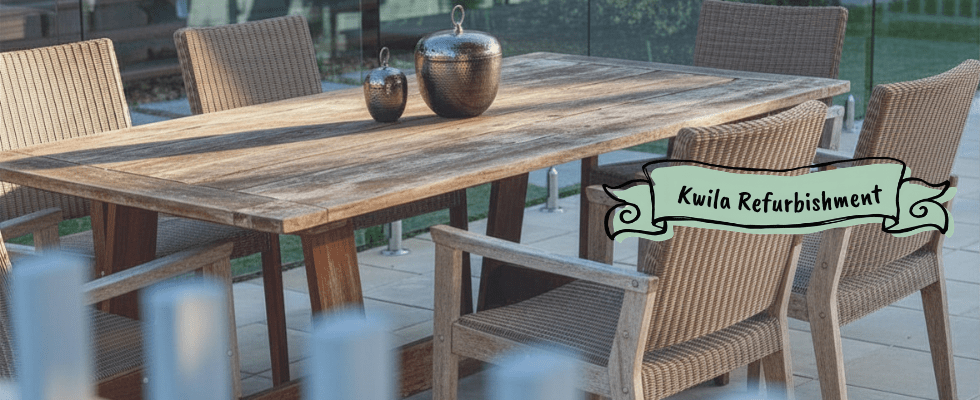
If your kwila outdoor furniture is looking grey, dry, or a little worse for wear, don't replace it just yet. Kwila is one of the most durable outdoor timbers available, and with the right approach, most furniture can be brought back to life. Here's how to do it.
Is Your Kwila Worth Restoring?
Before you start, it's worth checking that the frames are still structurally sound. Kwila is incredibly resilient, so unless there is significant rot, broken joints, or major structural damage, the answer is almost always yes. Surface greying, dryness, cracking, and staining are all cosmetic issues that can be addressed.
The most common signs that your kwila needs attention rather than replacement are:
- The timber has turned grey or silver from UV exposure
- The surface feels dry or rough to the touch
- There are surface cracks along the grain
- Mould or mildew staining has built up
- Slings or cushions are sagging, torn, or faded
What You'll Need
- A stiff-bristle brush or scrubbing pad
- Mild detergent or a dedicated timber cleaner
- Sandpaper (80–120 grit for heavy weathering, 180–240 grit for finishing)
- Kwila oil
- A clean cloth or brush for applying oil
- Replacement slings if needed

Step 1: Clean the Timber Thoroughly
Start with a thorough clean to remove dirt, mould, mildew, and any old surface treatments. Mix a mild detergent with warm water and scrub the timber with a stiff brush, working along the grain. For heavy mould or staining, a dedicated outdoor timber cleaner will give better results.
Rinse well with clean water and allow the furniture to dry completely before moving to the next step. This can take 24–48 hours depending on the weather, so pick a dry spell to start your restoration.
Step 2: Sand Back the Surface
Once dry, sand the timber to remove the grey surface layer and open up the grain ready to absorb oil. Start with a coarser grit (around 80–120) if the timber is heavily weathered, then finish with a finer grit (180–240) for a smooth result. Always sand along the grain, never across it.
Wipe away all dust with a dry cloth before oiling.
Step 3: Apply Kwila Oil
Kwila oil replenishes the natural oils that have dried out over time, restoring the timber's colour, flexibility, and weather resistance. Apply a generous coat with a brush or cloth, working it into the grain. Allow it to soak in for 15–20 minutes, then wipe away any excess.
For furniture that has been neglected for several years, a second coat applied after 24 hours will give a much better result. The timber will visibly darken and come back to life as the oil penetrates.
We stock kwila oil in our Brisbane showroom. Get in touch if you'd like to confirm availability before visiting.
Step 4: Replace Slings or Cushions if Needed
A fresh set of slings can make a dramatic difference to the overall result. If your chairs have sagging, torn, or faded slings, replacing them at the same time as your timber restoration will give you furniture that looks and feels completely renewed.
We stock replacement slings for a range of S2dio kwila chair models, available from $69 per chair and posted anywhere in Australia.
Keeping It Looking Good Going Forward
Once restored, a simple annual oiling will keep your kwila furniture in great condition and prevent it from reaching the point of needing a full restoration again. A quick clean every month or so and a seasonal check of any hardware will also go a long way.
For more detail on ongoing care, see our kwila furniture maintenance guide.