Outdoor furniture puts up with a lot. Queensland sun, afternoon storms, the occasional spilled drink, and months of regular use. The good news is that keeping it clean doesn't need to be complicated. A little regular attention goes a long way, and most materials need far less effort than people expect.
Here's a practical guide to cleaning outdoor furniture by material, with a few tips we share with customers in the showroom.
How to clean outdoor furniture cushions
Cushions are usually the first thing to show dirt, but most outdoor cushion fabrics are designed to be easy to care for. We recommend spot cleaning rather than removing covers. Outdoor cushions are often densely filled, and forcing covers back on can break zips and damage stitching.
- For everyday marks, a damp cloth with mild soapy water is usually all you need
- For tougher stains, use a soft brush and work the soapy water gently into the fabric, then rinse with clean water
- For mildew spots, a solution of one part white vinegar to three parts water works well as a natural treatment
- If you've applied a fabric protector spray to your cushions, most spills will wipe straight off with a damp cloth
High-performance fabrics like Olefin and Sunbrella are water-repellent and quick-drying, which makes them much easier to maintain. A furniture cleaning spray is also a great option for a quick, effective clean without any scrubbing. If your cushions are beyond cleaning, we have a range of off-the-shelf replacement cushions available, or we can help with custom replacement cushions made to fit your existing furniture.

Rope weave on outdoor lounge
How to clean outdoor wicker furniture
Synthetic wicker is one of the easier materials to maintain. Unlike natural rattan, it won't absorb moisture or crack in the sun, but dirt can build up in the weave over time.
- Use a soft brush or vacuum with a brush attachment to remove loose dirt from the weave
- Wipe down with a damp cloth and mild soapy water
- For a deeper clean, hose it down gently and allow to dry fully in the shade
- Avoid harsh chemicals or abrasive scrubbers, which can damage the weave over time
A quick wipe down every few weeks keeps wicker looking fresh with minimal effort. Browse our wicker outdoor furniture collection if you're looking for a new setting.

Wicker weave on outdoor lounge
How to clean teak outdoor furniture
Teak is naturally resistant to moisture and insects, which makes it one of the lower-maintenance timber options. Over time it develops a silver-grey patina. Some people love this look, others prefer to maintain the original honey colour.
- For general cleaning, use a soft brush and mild soapy water, working with the grain
- Rinse well and allow to dry naturally
- To maintain the original colour, apply a teak protector once or twice a year. This is different to teak oil and provides better long-term protection
- Avoid pressure washing, which can raise the grain and damage the timber surface
We have a full guide to teak care and maintenance if you'd like more detail, and we stock a range of maintenance products including teak protector. You can also browse our full teak outdoor furniture collection.

Teak dining table and bench seat
How to clean aluminium outdoor furniture
Powder-coated aluminium is one of the most low-maintenance outdoor furniture materials available. It won't rust, and the coating is designed to hold up well in Queensland conditions.
- Wipe down with a damp cloth and mild soapy water
- Dry with a soft cloth to avoid water spots
- For stubborn marks, a non-abrasive household cleaner works well. Avoid anything with bleach or harsh solvents
- Check any joints or hardware once a year and tighten if needed
That's genuinely all most aluminium furniture needs. It's one of the reasons we recommend it so often for Brisbane's climate.

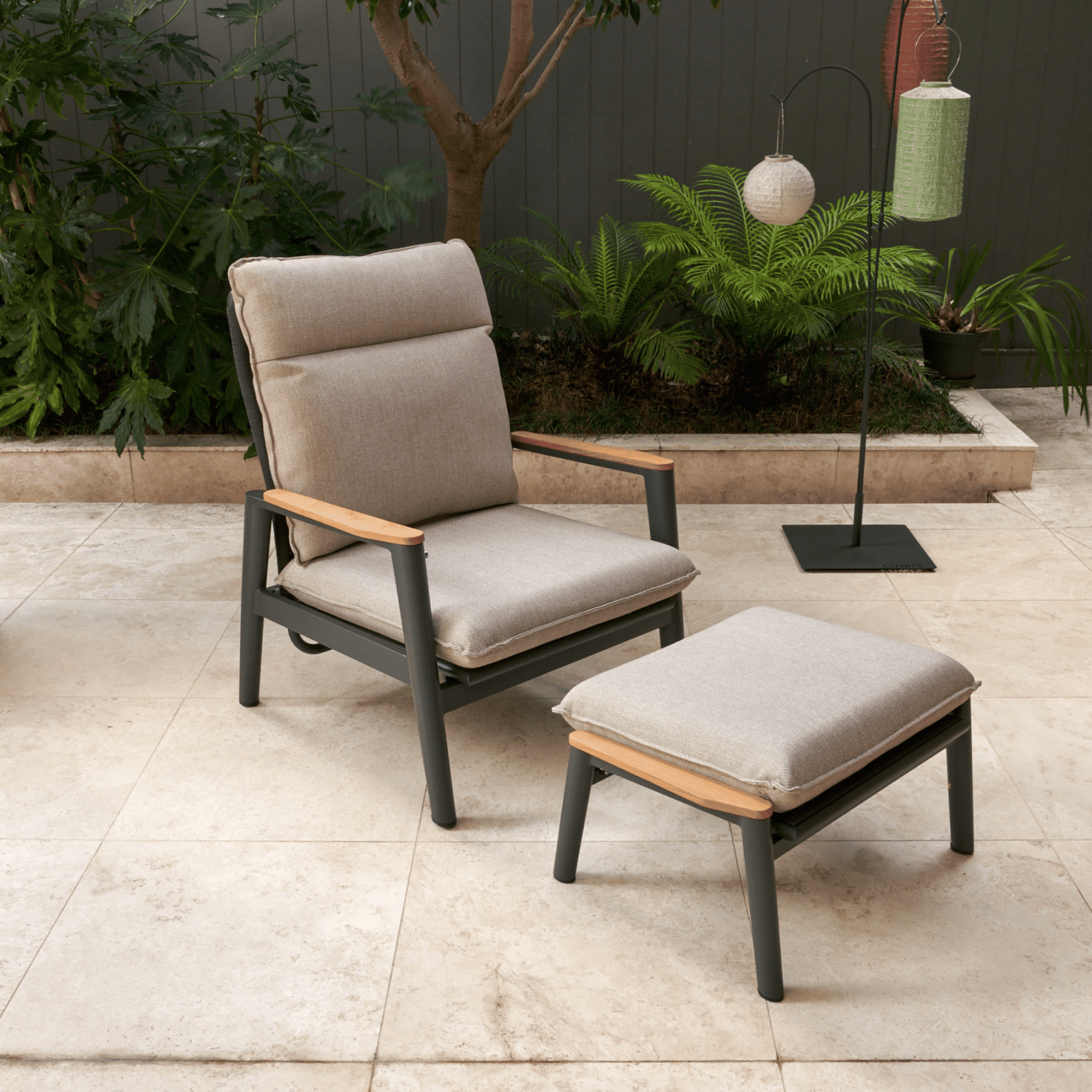
Aluminium & teak lounge
How to clean outdoor sofas and lounge settings
Outdoor lounge settings typically combine a few different materials, an aluminium or teak frame with wicker, rope, or upholstered fabric, plus cushions. The approach is the same as above for each material, but a few extra tips for lounge settings specifically:
- Get into the habit of bringing cushions inside during heavy rain or extended periods of non-use
- A furniture cover is worth having for the frame if the setting is in a fully exposed position
- Check underneath the frame occasionally, as dirt and moisture can collect there without being obvious
- For rope or woven cord furniture, a gentle hose down and air dry is usually all that's needed
How to weatherproof outdoor furniture
Cleaning is one part of the equation, protection is the other. A few simple steps make a real difference to how long your furniture lasts and how easy it is to maintain:
- Furniture covers - worth the investment for settings in exposed positions, or during extended periods of non-use
- Teak protector - applied once or twice a year keeps teak looking its best and slows the greying process
- Fabric protector spray - adds an extra layer of water and stain resistance to cushion fabric, making everyday cleaning much easier
- Positioning - where possible, position furniture under a pergola, shade sail, or umbrella to reduce direct UV exposure
We have a full range of maintenance and care products in store and online, including teak protector, fabric cleaner, furniture cleaning spray, and furniture covers.
How often should you clean outdoor furniture?
For most Brisbane homes, a quick wipe down every few weeks during the warmer months is enough to stay on top of things. A more thorough clean at the start of summer, before the entertaining season kicks in, and again at the end is a good rhythm to get into.
If your furniture is in a fully exposed position or near the coast, you may want to clean it a little more frequently, as salt air and UV exposure accelerate wear on most materials.
If you have questions about caring for a specific product, get in touch or come into the showroom. We're happy to help.

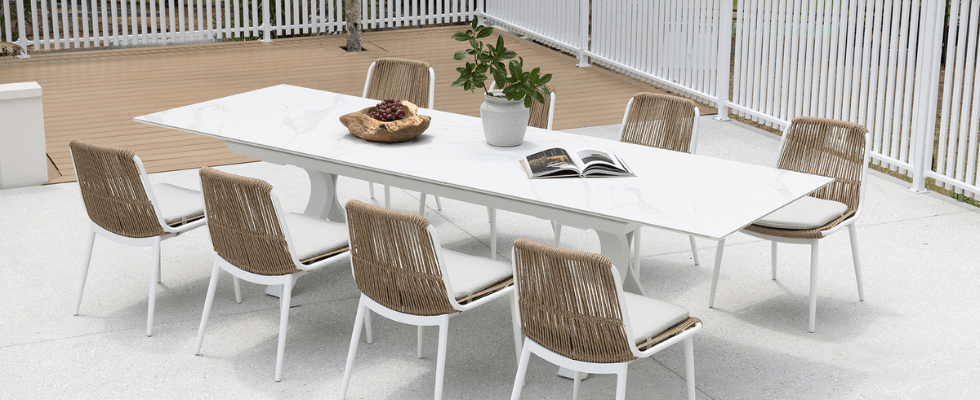
Aluminium extendable dining table and chairs