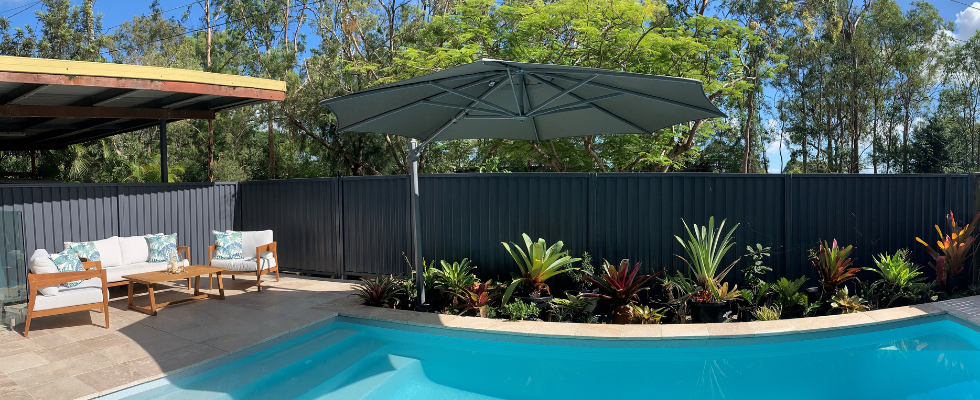
If you're trying to decide between a cantilever and a market (centre pole) umbrella, you're not alone. It's one of the most common questions we get in the showroom. Both do a great job of keeping the sun off you, but they work quite differently. Here's a straightforward guide to help you figure out which one suits your space.
What is a market umbrella?
A market umbrella, sometimes called a centre pole umbrella or patio umbrella, is the classic style most people picture when they think of outdoor shade. The pole runs straight up through the middle of the canopy, and the whole thing sits in a weighted base or through a hole in your outdoor table with a base underneath.
They're simple, reliable, and generally more affordable than cantilevers. If your dining table has an umbrella hole in the centre, a market umbrella is the natural fit. They come in a wide range of sizes and shapes, round, square, and rectangular, so there's usually something to suit most spaces.
Browse Market Umbrellas

What is a cantilever umbrella?
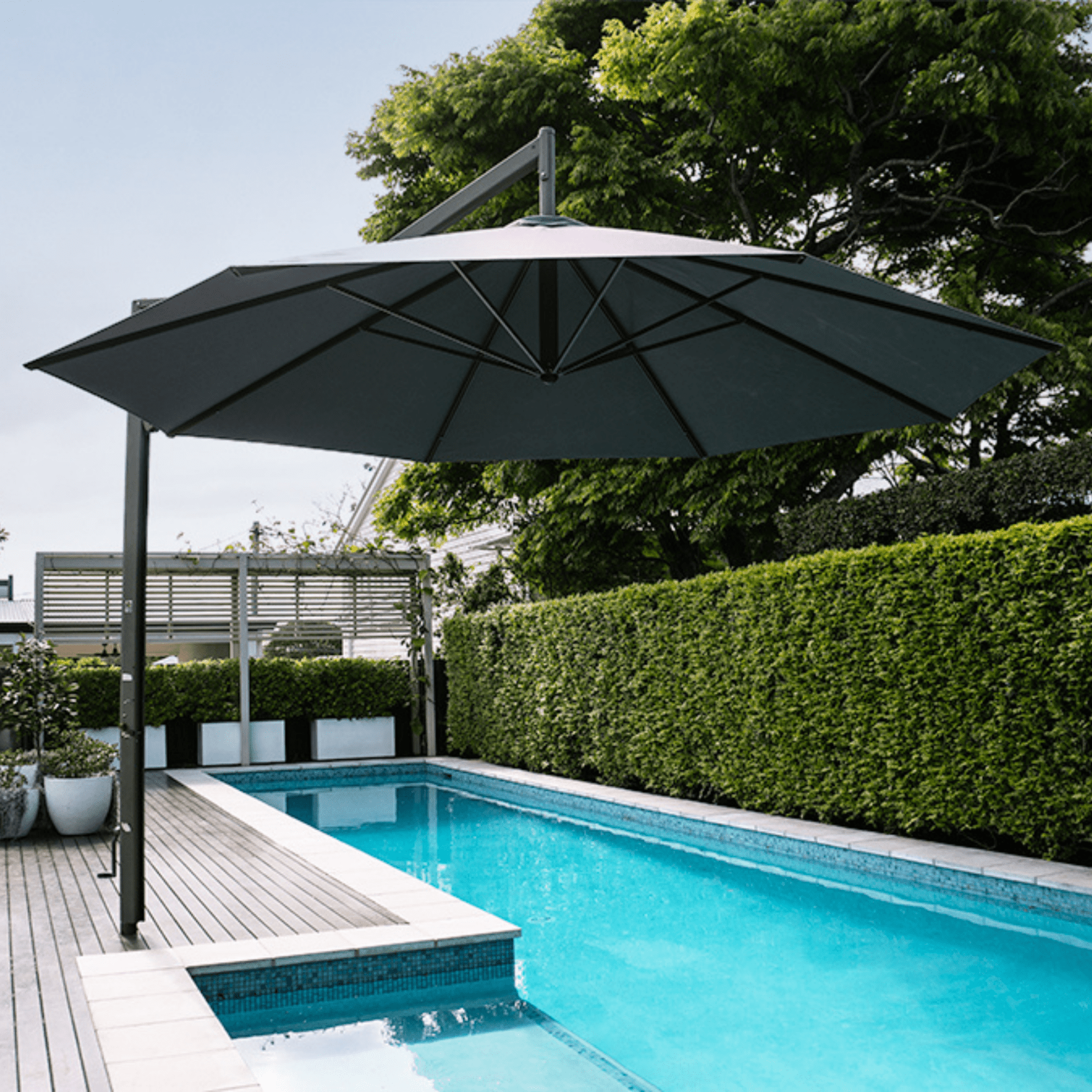
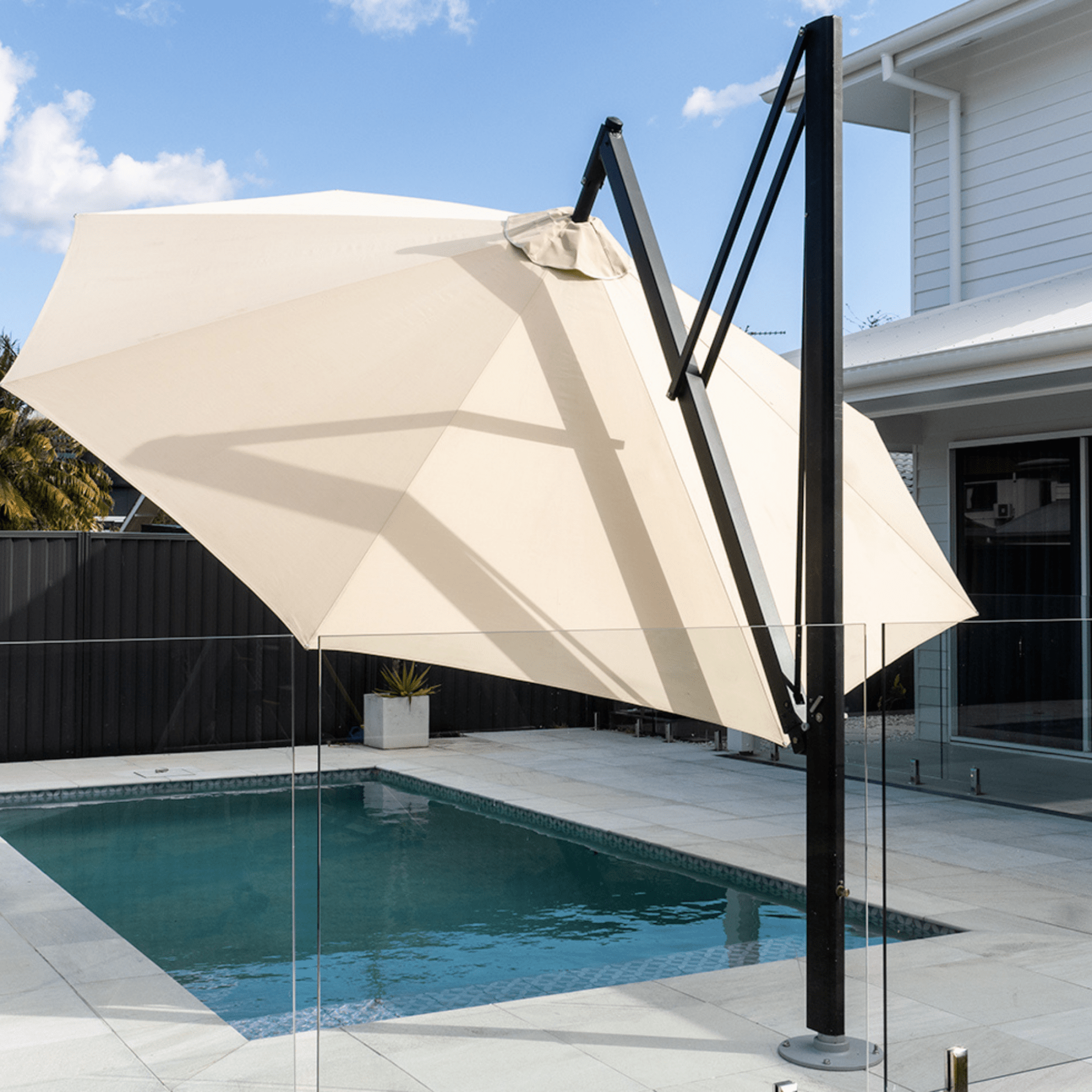
A cantilever umbrella has its pole off to the side, with the canopy extending out on an arm above the shaded area. Because there's no centre pole in the way, you get completely unobstructed shade, which makes a big difference when you're sitting underneath it.
Most cantilevers rotate 360 degrees around the post and can tilt, so you can follow the sun as it moves throughout the day. They're a popular choice for pool areas, lounge settings, and anywhere you want shade without a pole getting in the way. Most cantilever umbrellas will tilt back toward the pole, some will tilt side to side, and some will do both.

Market umbrella vs cantilever: which is better?
Neither is universally better. It really comes down to how you're using the space. Here's a quick way to think about it:
Choose a market umbrella if:
- Your outdoor table has a centre umbrella hole
- You want a more budget-friendly option
- You have a smaller patio or balcony
- You prefer a classic, simple look
Choose a cantilever if:
- You want to shade a pool, lounge area, or space without a table
- You need to follow the sun as it moves
- You want unobstructed shade with no pole in the middle
- You're covering a larger area
What are the disadvantages of cantilever umbrellas?
Cantilevers are brilliant, but they do come with a few things to consider:
- Cost. They're generally more expensive than market umbrellas, because of the engineering involved in the arm and rotation mechanism.
- Base weight. Because the canopy is offset, the base needs to be heavier to counterbalance it. You'll need either heavy ballast blocks, a bolted base, or an in-ground installation.
- Footprint. The pole and base sit to the side of the shaded area, so you need to factor that into your layout.
That said, for most people the flexibility and unobstructed shade more than make up for it.
Shading a pool: cantilever vs market umbrella
This is where cantilevers really shine. If you position a cantilever beside a pool, the entire canopy shades the water. A market umbrella, by contrast, would need its centre pole at the pool's edge, meaning only half the canopy is actually over the water during the middle of the day. For pool areas, a cantilever is almost always the better choice.

How are cantilever umbrellas installed?
There are three main options:
- Ballast blocks - heavy concrete weights that sit around the base. No drilling required, and you can set it up the same day you bring it home. We have 2 options for ballast blocks - concrete or granite.
- Bolted base - the steel base is bolted into reinforced concrete. A good option for a permanent setup; a handy person can usually do this themselves.
- In-ground base - the post sleeve is concreted into the ground. This is the most secure option and is often done during a build or landscaping project. An in-ground base is only an option for wind-rated umbrellas.
How are market umbrellas secured?
Market umbrellas need a weighted base to stop them tipping or blowing away. A concrete base of around 25 to 30kg is suitable for most sizes. If you'd prefer something a little more refined, granite bases offer the same stability with a much nicer finish.
Ready to narrow it down further?
Once you've decided on the type, the next step is working out the right size, shape, and fabric for your space. Our guide, Tips for Choosing the Best Umbrella, walks you through all of that, or you're always welcome to come into the showroom and see the options in person.